Short Answer
For useful background, see A First-Time Guide to Home Insurance Inspections.
People often mistake a home insurance inspection for a pass-or-fail home appraisal, a buyer’s inspection, or a guarantee that future claims will be covered. It is usually a risk review performed for an insurer. The findings may affect eligibility, premiums, required repairs, coverage terms, or renewal, but the purpose, scope, and consequences depend on the insurer, property, policy, and state rules.
An inspection can involve an exterior visit, interior review, photographs, property measurements, or questions about major systems. Some insurers use third-party inspectors, while others rely on records, aerial imagery, applicant-provided photos, or remote technology. Knowing what type of review is planned helps homeowners prepare without assuming the inspector will evaluate every hidden defect.
Key Takeaways
A practical next step is A Practical Guide to Home Insurance Inspections.
- An insurance inspection evaluates underwriting risk; it is not a complete assessment of a home’s condition.
- A completed inspection does not promise policy approval, renewal, a particular premium, or payment of a future claim.
- Roof condition, electrical risks, plumbing, heating, exterior hazards, and property details commonly receive attention.
- Cosmetic imperfections usually matter less than conditions that could increase the likelihood or severity of a loss.
- Ignoring an inspection notice, blocking access, or giving inaccurate information can complicate underwriting decisions.
- Homeowners should verify findings, deadlines, repair standards, and policy consequences directly with the insurer.
What an Insurance Inspection Actually Examines
Another helpful reference is Home Insurance Inspections: What Inspectors Review and Why.
Underwriting is the insurer’s process for deciding whether and on what terms it will insure a risk. A home insurance inspection supplies information for that process. It may confirm details from an application, identify hazards, estimate replacement characteristics, or assess whether the property fits the insurer’s guidelines.
The inspection’s scope can vary considerably. An exterior inspection may document the roof, siding, foundation, steps, railings, trees, detached structures, pools, debris, or visible signs of poor maintenance. An interior inspection may consider wiring, plumbing, heating, water damage, fireplaces, living areas, or safety devices. Older homes may receive closer attention because aging systems can be harder or more expensive to repair after a loss.
Inspectors generally document observable conditions rather than open walls, diagnose every defect, or determine whether a policy covers a specific event. A clean report does not establish that the house is free from hazards. Likewise, a flagged item does not necessarily mean the home is uninsurable. The insurer decides how the observation fits its guidelines.
People also confuse replacement-cost information with market value. Market value reflects what a buyer might pay for the property and location. Replacement cost generally concerns the estimated expense of rebuilding covered structures using applicable materials and construction practices, subject to policy definitions and limits. An inspection may help an insurer review structural characteristics, but it is not a real-estate appraisal.
| Factor or Option | Why It Matters | Main Trade-off | What to Verify |
|---|---|---|---|
| Exterior-only review | Documents visible property and liability hazards | Less intrusive but limited in scope | Whether access or attendance is required |
| Interior inspection | May reveal the condition of major systems | More information requires home access | Rooms, systems, and documents requested |
| Remote photo review | Lets the insurer assess selected features | Convenient, but images must meet instructions | Submission method and privacy practices |
| Roof evaluation | Condition can influence loss risk and underwriting | Repair or replacement may be requested | Finding, deadline, and acceptable proof |
| Replacement-cost review | Helps assess rebuilding characteristics | A higher estimate may affect coverage needs | Building details, limits, and policy method |
From Inspection Notice to Underwriting Decision
For a related decision, read Home Insurance Inspections: Cost, Timing, and What to Expect.
The process commonly begins after an application, a policy change, or during an existing policy term. The insurer or inspection company may contact the policyholder to schedule access, announce an exterior visit, or request photographs. Homeowners should confirm that the communication is legitimate by using contact information from their policy documents or insurer, not an unverified message.
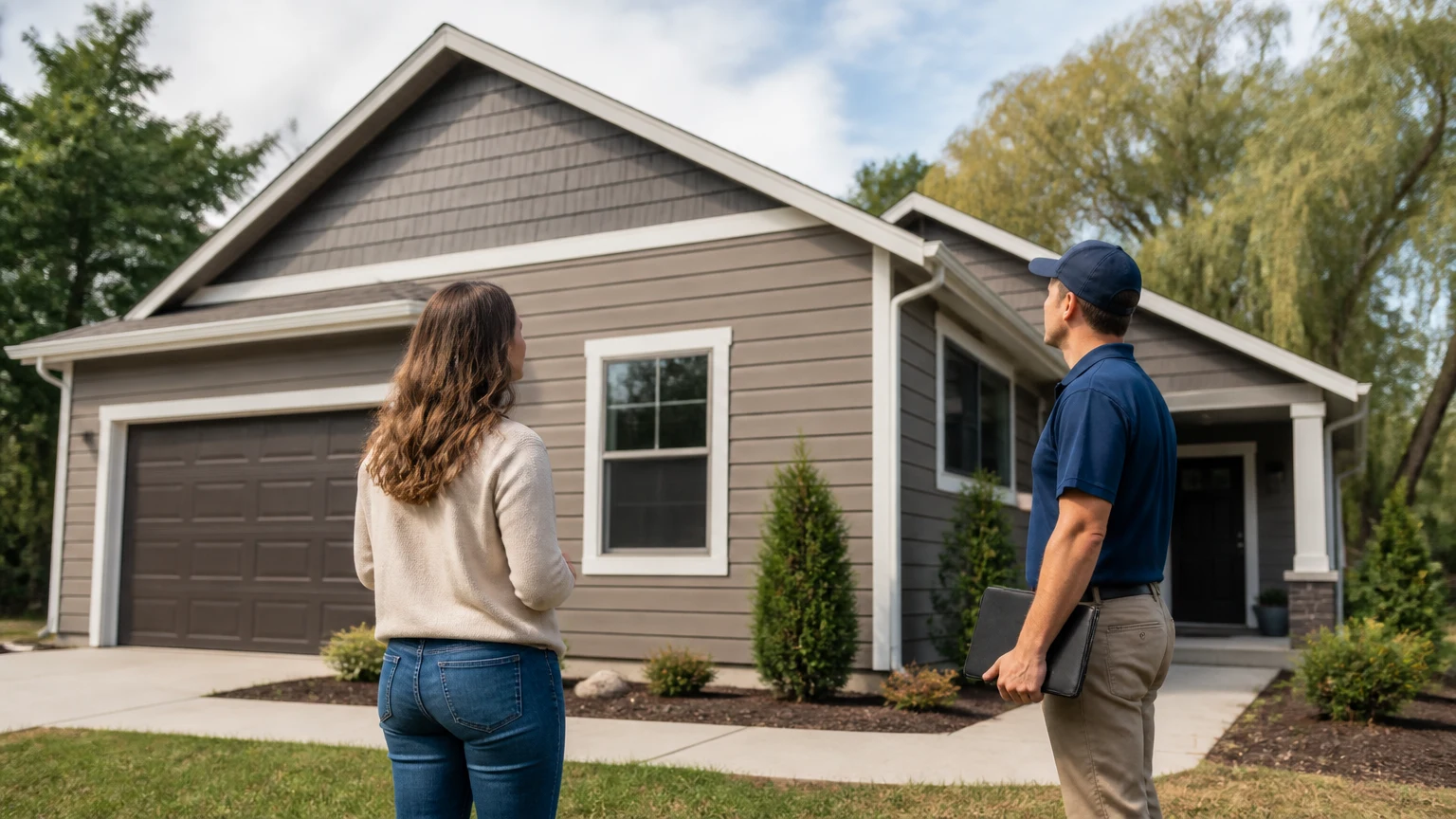
During the visit, the inspector records requested observations and may ask about renovations, roof age, occupancy, heating, electrical service, or plumbing updates. An inspector typically gathers information and does not make the final coverage decision. Homeowners should answer accurately, distinguish known facts from estimates, and avoid concealing damage or guessing about work they cannot document.
The report then goes to underwriting. Possible responses include no requested action, a request for clarification, a change in insurance terms, proof of repairs, a different coverage limit, or a decision concerning eligibility or renewal. Outcomes vary by insurer and state. The inspector’s silence at the property should not be treated as approval.
If action is required, the notice should identify the concern, expected correction, evidence needed, deadline, and possible policy consequence. A homeowner who disputes a finding can ask how to submit dated photographs, permits, invoices, contractor statements, or another appropriate evaluation. Any cancellation or nonrenewal notice should be reviewed promptly because state procedures and shopping time can matter.
Common Mistakes
More context is available in Home Insurance Discounts: How to Qualify and Get the Most Value.
- Treating the visit as optional: Missing messages or refusing required access can leave the insurer without information it considers necessary, potentially affecting eligibility or policy status.
- Preparing only for appearance: Cleaning helps access, but fresh paint does not resolve deteriorated roofing, unsafe steps, active leaks, or exposed wiring that may drive risk concerns.
- Assuming the inspector approves coverage: The inspector usually documents conditions; underwriting applies company rules later. Casual comments are not substitutes for a written decision.
- Hiding or misdescribing conditions: Inaccurate application or inspection information can create serious underwriting and claim problems. Disclose requested facts honestly and correct errors promptly.
- Making rushed repairs without requirements: A quick patch may not satisfy the insurer and could waste money. Confirm the requested standard, evidence, and deadline before hiring anyone.
- Using the report as a maintenance guarantee: The limited review may miss defects. Homeowners remain responsible for maintenance and may need qualified professionals for specialized concerns.
Practical Tips
- Authenticate the request. Call the insurer or agent through a trusted number and confirm the inspection company, scope, and appointment details.
- Ask what access is needed. Find out whether the review is exterior-only, interior, virtual, or photo-based and whether an adult must attend.
- Gather reliable records. Locate permits, paid invoices, roof documentation, system-update records, and prior repair evidence without claiming more than those documents establish.
- Provide safe, clear access. Unlock requested areas, contain pets, remove simple obstructions, and never enter an unsafe roof, attic, crawlspace, or electrical area for photographs.
- Address obvious maintenance issues. Correct manageable hazards such as loose handrails or accumulated debris when safe, but use qualified contractors for technical or safety-critical work.
- Keep a communication file. Save notices, photographs, submission confirmations, names, dates, repair receipts, and written responses in case details are questioned.
- Respond early to findings. Ask for clarification immediately if a requirement is vague or a deadline appears impractical; do not assume an extension has been granted.
What to Verify Before You Decide
Before paying for repairs, changing insurers, or disputing a report, obtain the actual underwriting notice. Verify whether the issue affects new-policy eligibility, renewal, a premium, a deductible, a coverage limitation, or only a recommendation. Ask whether correcting the item will trigger reconsideration, not whether it guarantees a particular result.
Review the declarations page, endorsements, inspection correspondence, and applicable cancellation or nonrenewal notice. The declarations page summarizes major policy details, while endorsements modify coverage. Neither an inspection nor a repair receipt overrides exclusions, conditions, limits, or deductibles. Ask the insurer or licensed insurance professional how the relevant policy language applies.
For a disputed physical condition, determine what evidence the insurer accepts and whether a licensed roofer, electrician, plumber, engineer, or other qualified professional is appropriate. Verify contractor licensing and permit requirements with relevant state or local authorities. For questions about notice rights or insurer conduct, consult the state insurance department or a qualified attorney rather than relying on general online advice.
Frequently Asked Questions
Can I fail a home insurance inspection?
“Fail” is usually an oversimplification. The insurer may identify unacceptable conditions, request corrections, revise terms, or decline to offer or continue coverage, subject to policy terms and state rules. Ask for the decision and reasons in writing.
Does the inspector need to enter my home?
Not always. Some reviews are exterior-only or remote, while others require interior access. Confirm the scope beforehand. If access presents a disability, scheduling, tenant, or safety concern, contact the insurer promptly to discuss available arrangements.
Will fixing every listed issue lower my premium?
Not necessarily. Repairs may satisfy an underwriting requirement without reducing the premium. Pricing can reflect many property, coverage, household, and company factors. Ask what consequence applies and whether the insurer will review updated documentation.
Is an insurance inspection enough before buying a house?
No. It serves the insurer’s underwriting purpose and may be narrow. A buyer’s inspection has a different purpose, though it also has limits. Buyers should consider appropriate independent specialists and review contracts, disclosures, and local requirements.
Bottom Line
A home insurance inspection is best understood as an information-gathering step, not a warranty, claim decision, or universal safety certification. The biggest errors come from misunderstanding its purpose, overlooking communications, providing unsupported information, or acting on vague repair demands.
Confirm who requested the inspection, what will be examined, and what documentation is expected. If findings lead to action, get the requirement, deadline, accepted proof, and policy consequence in writing. Then compare the notice with the policy and use qualified professionals where needed. Careful verification cannot ensure a preferred outcome, but it can reduce confusion and help homeowners make informed decisions.